Wet Cat Food
Reviews of Canadian wet and canned cat food from Canadian-owned and Canadian-manufactured brands. Includes pate, gravy, and broth-based recipes.
Note: We are actively building out our coverage of Canadian pet food brands. Check back often as new reviews are added regularly.
Health Benefits of Wet Cat Food
Wet cat food offers meaningful health advantages over dry kibble, particularly for cats that don’t drink much water on their own. Cats evolved as desert animals with a low thirst drive — in the wild, most of their hydration came from prey. Wet food replicates that by delivering 70–80% moisture content per serving, which supports kidney function, urinary tract health, and helps prevent the formation of crystals and stones that are common in cats fed exclusively dry food. Beyond hydration, wet food typically contains a higher proportion of animal protein and lower carbohydrates than dry kibble, which aligns more closely with a cat’s obligate carnivore nutritional requirements. Many veterinarians recommend incorporating wet food into a cat’s diet as a practical way to increase daily fluid intake without relying on a cat to drink from a bowl.
How Much Wet Cat Food Should I Feed My Cat?
As a general guideline, the average adult cat requires approximately one 3 oz can per 3–3.5 lbs of body weight per day, split across two meals. For a typical 10 lb cat this works out to roughly 8.5–10 oz per day — though this varies with the caloric density of the specific product. Smaller cats or those with a lower activity level will need proportionally less; larger or more active cats may need more. Kittens generally require up to twice the adult amount relative to their body weight to support growth. Because caloric density varies significantly between wet food products — a standard 3 oz can can contain anywhere from 70 to 170 calories — the most reliable starting point is always the feeding guide on the packaging. If you are combining wet and dry food, reduce each proportionally so total daily calories stay consistent. Always consult your veterinarian if your cat has specific health conditions that may affect dietary requirements.
Should You Feed Your Cat Both Dry and Wet Food?
Yes — and many veterinarians and feline nutritionists consider a mixed feeding approach to be the most practical way to balance the benefits of both formats. The general recommendation is to use wet food as the primary protein and hydration source, and dry food as a supplement rather than the foundation of the diet.
The case for combining the two comes down to what each format does well. Wet food delivers moisture, high animal protein, and low carbohydrates — closely matching a cat’s natural nutritional needs. Dry food offers convenience, a longer shelf life once opened, and for some cats a texture that supports mild mechanical cleaning of the teeth. It also tends to be more calorie-dense per gram, which can be useful for maintaining weight in cats with smaller appetites.
The most common mixed feeding approach is to serve a measured portion of wet food once or twice daily and leave a small, controlled amount of dry food available between meals. The key word is controlled — free-feeding dry kibble without limits is one of the most common drivers of feline obesity and can undercut the hydration benefits of adding wet food. If you’re combining both, calculate your cat’s total daily calorie target and split it between the two formats, rather than feeding full portions of each.
A few things worth noting: not every cat takes well to both textures, and some cats that have eaten only dry food for years may initially refuse wet food. Transitioning slowly — mixing a small amount of wet food into dry kibble and gradually shifting the ratio — typically works well over one to two weeks. Cats with urinary tract issues, kidney disease, or diabetes often benefit most from maximising the wet food proportion, so if your cat has any of these conditions it is worth discussing the ratio with your veterinarian.
Latest Reviews
-
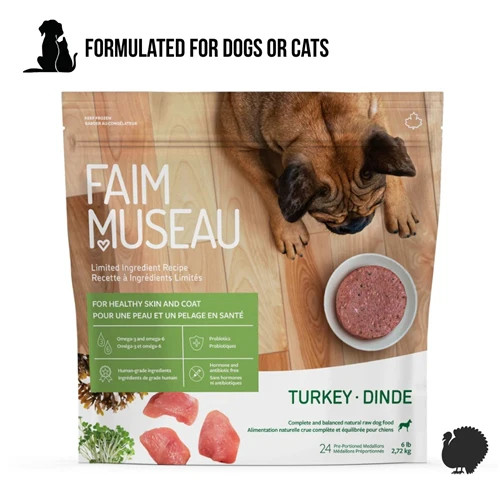
Faim Museau Turkey Formula Cat Food
Product review of Faim Museau Turkey Formula raw frozen cat food. Quebec-raised turkey, muscle/organ/bone, zero additives. Ideal for chicken-sensitive cats. CanadaPetPicks: 4.5/5.
-
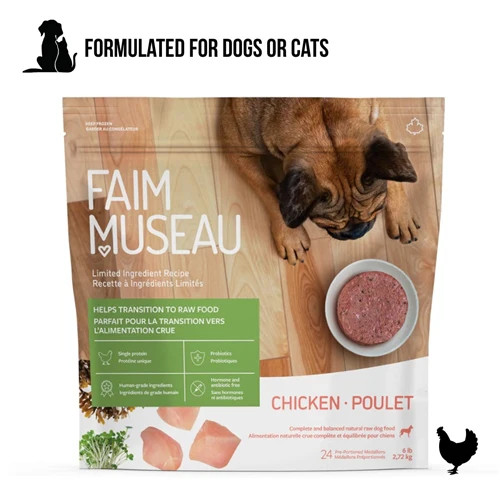
Faim Museau Chicken Formula Cat Food
Product review of Faim Museau Chicken Formula raw frozen cat food. Quebec-raised chicken, muscle/organ/bone, zero additives. HACCP-certified, Bromont QC. CanadaPetPicks: 4.5/5.
-
FirstMate Limited Ingredient Wild Salmon Cat Food
Single product review of FirstMate Limited Ingredient Wild Salmon wet cat food. Wild Pacific salmon, no peas, no gums, BPA-free. Made in BC. CanadaPetPicks score: 4.5/5.
-
FirstMate Wet Cat Food
Summary review of FirstMate canned wet cat food. In-house cannery in BC, single protein, no peas, no gums, BPA-free. CanadaPetPicks aggregate score: 4.4/5.
-
Boreal Pork and Trout Cat Food
Single product review of Boreal Pork and Trout wet cat food. Novel protein, Canadian-made, 95% protein from meat/fish, grain-free, gum-free, chicken-free. CanadaPetPicks score: 4.3/5.
-
Boreal Cobb Chicken and Atlantic Salmon Cat Food
Single product review of Boreal Cobb Chicken and Atlantic Salmon wet cat food. Canadian-made, 95% protein from meat/fish, grain-free, gum-free. CanadaPetPicks score: 4.4/5.
-
Boreal Wet Cat Food
Summary review of the Boreal Canadian-Made wet cat food line. 13 recipes, made in Canada, 95% protein from meat/fish, grain-free, gum-free. CanadaPetPicks aggregate score: 4.3/5.