Dry Cat Food
Reviews of Canadian dry cat food (kibble) from Canadian-owned and Canadian-manufactured brands. Includes grain-free, grain-friendly, and limited ingredient dry recipes.
Note: We are actively building out our coverage of Canadian pet food brands. Check back often as new reviews are added regularly.
Health Benefits of Dry Cat Food
Dry cat food offers a distinct set of practical and nutritional advantages that make it a useful component of many cats’ diets, particularly when used alongside wet food. The most commonly cited benefit is convenience — dry kibble does not require refrigeration, can be left out for cats that prefer to graze throughout the day, and has a shelf life of 12–18 months unopened. It is also significantly more affordable per serving than wet food, which is meaningful for multi-cat households.
The dental benefit of dry kibble is frequently claimed but deserves an important caveat. Standard kibble does provide some mild mechanical abrasion as cats chew, and peer-reviewed research published in BMC Veterinary Research confirmed that cats fed dry diets showed less dental calculus than those fed wet diets. However, board-certified veterinary dentist Dr. Emily Baldwin notes that most cats tend to swallow kibble whole rather than chewing it, meaning many cats do not benefit from this abrasive action at all. The evidence for dental benefit from standard dry food is modest. Purpose-formulated dental kibbles — specifically those carrying the Veterinary Oral Health Council (VOHC) seal — have been clinically proven to reduce plaque and tartar through a different mechanism: a specific kibble size, shape, and texture engineered to encourage chewing and mechanical cleaning. Standard kibble and dental-specific kibble are meaningfully different in this regard.
Dry food is also more calorie-dense than wet food — typically 350–450 kcal per cup compared to roughly 70–100 kcal per 100g for wet food — making it a practical option for highly active dogs and cats with higher energy requirements. Portion control is straightforward with kibble and it is well-suited for use in food puzzles and automatic feeders. The main limitation is the low moisture content of around 10%, which does not contribute meaningfully to daily hydration. Cats on a dry-only diet should always have fresh water readily available.
How Much Dry Cat Food Should I Feed My Cat?
For the average adult cat (approximately 8–10 lbs / 3.6–4.5 kg), most veterinary sources recommend roughly ¼ to ½ cup of dry food per day — approximately 250 calories — split across two meals. PetMD’s veterinary feeding guide uses ¼ cup per day as the baseline for a 10 lb spayed/neutered adult cat eating a standard-calorie dry food (~480 kcal/cup). This is notably less volume than most owners expect, because dry kibble is calorie-dense.
The critical variable is the specific food’s calorie content. Dry cat foods typically range from 300–500+ kcal per cup depending on the brand and formula — a difference of nearly double between the lowest and highest density options. This is why the feeding guide on the bag is the most reliable starting point: use the kcal/cup figure and your cat’s weight to calculate the correct portion, rather than using a generic cup measurement. Kittens need up to twice the amount of an adult cat of the same weight to support growth. Cats on a combined wet and dry diet should have their kibble portion reduced proportionally based on the calories contributed by the wet food — the goal is to hit total daily calorie target, not to feed full portions of each. Free-feeding dry food without measuring is one of the most common drivers of feline obesity — approximately 61% of cats in the US are overweight or obese according to studies cited by Chewy’s veterinary team.
Should You Feed Your Cat Both Dry and Wet Food?
Yes — and the consensus among veterinary nutritionists is that combining dry and wet food is a practical way to balance the strengths of both formats. PetMD recommends a general ratio of 2/3 wet food to 1/3 dry food as a starting point, though the right split depends on your cat’s individual health needs, weight, and hydration status.
The case for combining formats: wet food handles hydration, protein quality, and alignment with feline carnivore biology; dry food handles convenience, cost management, dental texture benefit (for cats that actually chew it), and compatibility with automatic feeders and puzzle toys. Many cat owners find a practical rhythm of offering wet food for scheduled morning and evening meals while leaving a small, measured amount of kibble available during the day.
The key rule when combining is to split total daily calories between the two formats — not to feed full portions of each. A 10 lb adult cat needs approximately 250 kcal per day regardless of what format it comes from. Adding wet food on top of a full kibble portion significantly overshoots this. Cats transitioning from dry-only to a mixed diet should be introduced to wet food gradually over 1–2 weeks. Some dry-only cats will initially refuse wet food; trying different textures (pâté, shredded, chunks in gravy) usually resolves this.
Latest Reviews
-
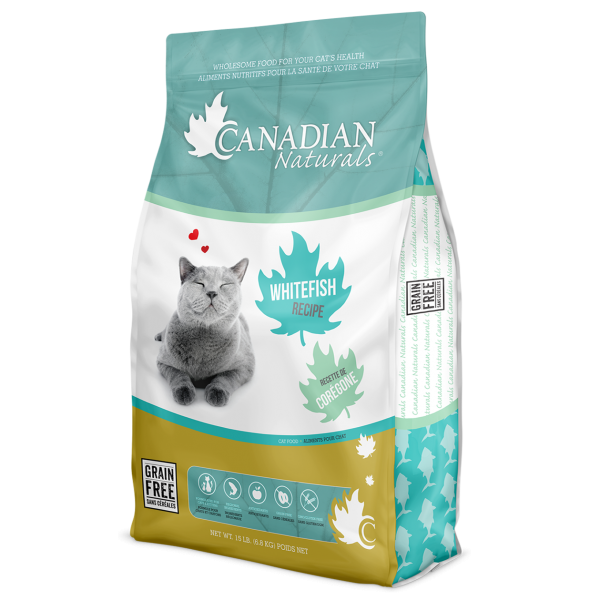
Canadian Naturals Grain-Free Whitefish Cat Food
Review of Canadian Naturals Grain-Free Whitefish dry cat food. Made in Abbotsford BC. Novel white fish protein, pea & potato base, non-GMO. Ideal for sensitive cats. Zero recalls. CanadaPetPicks: 4.1/5.
-
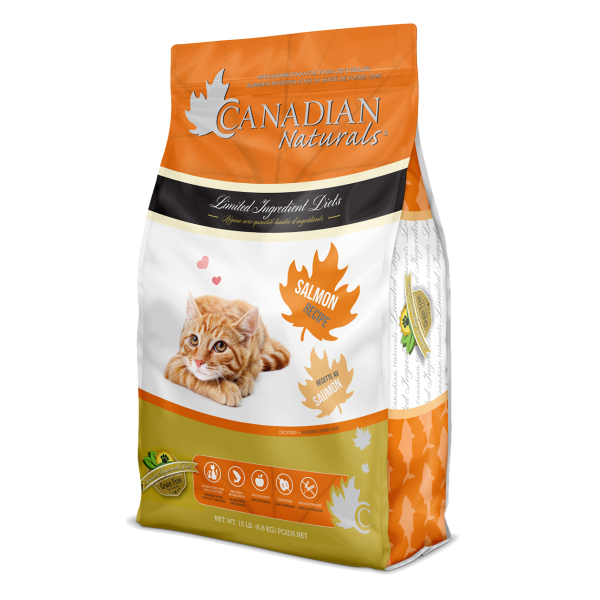
Canadian Naturals Grain-Free Salmon Cat Food
Review of Canadian Naturals Grain-Free Salmon dry cat food. Made in Abbotsford BC. BC salmon, pea & potato base, naturally occurring omega-3s. Non-GMO, zero recalls. CanadaPetPicks: 4.1/5.
-
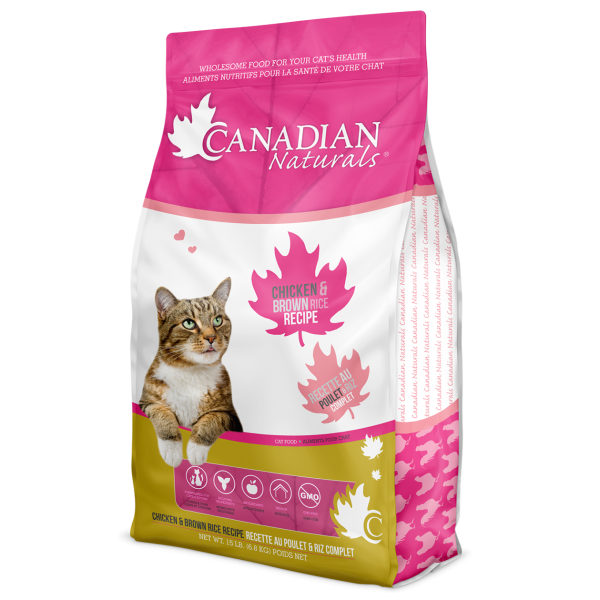
Canadian Naturals Chicken & Brown Rice Cat Food
Review of Canadian Naturals Chicken & Brown Rice grain-inclusive dry cat food. Made in Abbotsford BC. Fresh chicken, brown rice, non-GMO Fraser Valley ingredients. Zero recalls 50+ years. CanadaPetPicks: 4.0/5.
-
Cat Food | Dry Cat Food | Kitten | Quebec
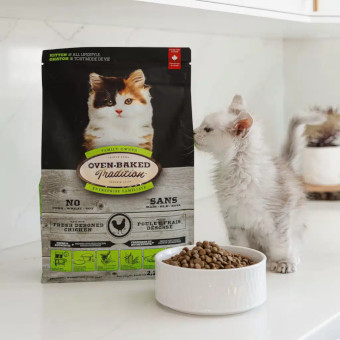
Oven-Baked Tradition Kitten Chicken Cat Food
Review of Oven-Baked Tradition Kitten Chicken dry cat food. Growth-stage formula, home-milled grains, DHA from herring oil. Made in Saint-Hyacinthe QC. CanadaPetPicks: 4.2/5.
-
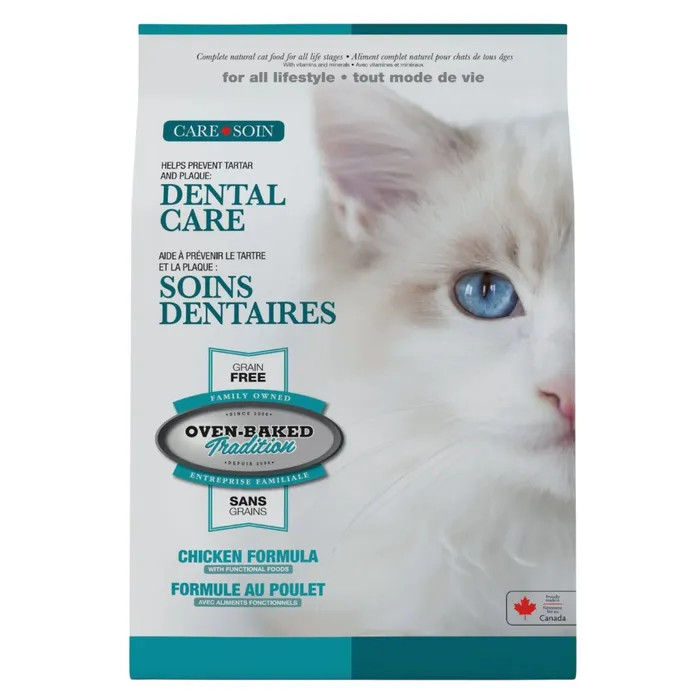
Oven-Baked Tradition Dental Care Grain-Free Cat Food
Review of Oven-Baked Tradition Dental Care Grain-Free dry cat food. Vet-collaborated formula, slow-baked, sodium hexametaphosphate tartar control. Made in Saint-Hyacinthe QC. CanadaPetPicks: 4.3/5.
-
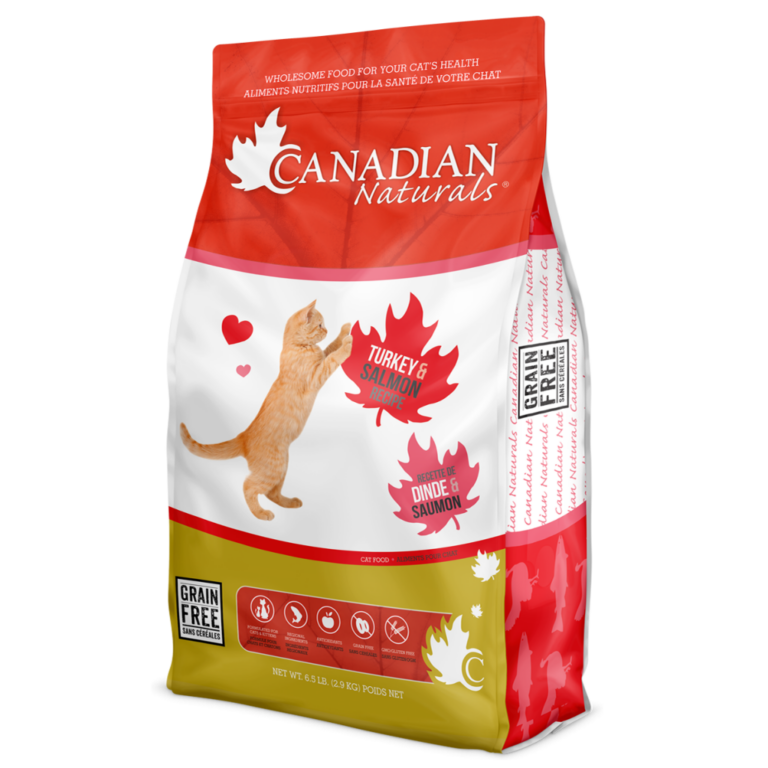
Canadian Naturals Turkey & Salmon Cat Food
Review of Canadian Naturals Turkey & Salmon grain-inclusive dry cat food. Made in Abbotsford BC. Dual protein, brown rice, non-GMO Fraser Valley ingredients. Zero recalls. CanadaPetPicks: 4.0/5.
-
Carna4 Fish Formula Cat Food
Single product review of Carna4 Fish Formula dry cat food. Wild herring, perch, salmon, zero synthetics, made in Quebec. Cat Food Advisor recommended. CanadaPetPicks: 4.4/5.
-
Carna4 Cat Food
Summary of Carna4 cat food. Zero synthetics, sprouted seeds, made in Quebec. Cat Food Advisor recommended. Cats.com B+. CanadaPetPicks: 4.5/5.
-
Canadian Naturals Cat Food
Summary of Canadian Naturals dry cat food. Made in Abbotsford BC. Non-GMO, Fraser Valley ingredients. Four recipes, grain-free and grain-inclusive. CanadaPetPicks: 3.9/5.
-
Oven-Baked Tradition Cat Food
Summary of Oven-Baked Tradition dry cat food. Slow-baked, home-milled grains, made in Saint-Hyacinthe QC. Grain-free and grain-inclusive options. CanadaPetPicks: 4.2/5.
-
FirstMate Dry Cat Food
Summary review of FirstMate dry cat food lines — Grain-Free and Grain Friendly. No peas, no legumes. Made in Abbotsford BC. CanadaPetPicks aggregate score: 4.3/5.
-
FirstMate Pacific Ocean Fish with Blueberries Dry Cat Food
Single product review of FirstMate Pacific Ocean Fish with Blueberries dry cat food. No peas, no legumes, wild fish, grain-free. Made in BC. CanadaPetPicks score: 4.4/5.